Unlocking Playful Branding with Happy Clown
In the vast landscape of digital design and visual communication, typography often serves as the silent ambassador of a brand's personality. While minimalist sans-serifs dominate corporate boardrooms and sleek tech startups, there remains a vibrant, underserved niche for designs that evoke joy, nostalgia, and unbridled creativity. Enter Happy Clown, a fancy display font that has quickly become a go-to choice for creators looking to inject a sense of whimsy and character into their projects. Unlike standard typefaces designed for long-form readability, this font is engineered for impact, serving as a powerful tool for logos, headlines, and identity systems where standing out is the primary objective.
The Essence of Whimsical Typography
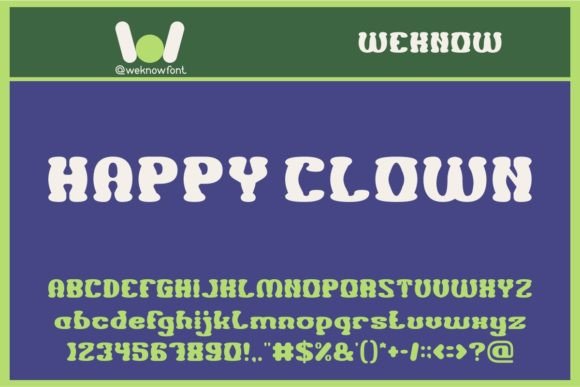
At its core, Happy Clown is more than just a collection of letters; it is a stylistic statement. Display fonts like this are crafted to be used at large sizes, where their unique contours, varying stroke weights, and playful quirks can be fully appreciated. The design language of Happy Clown leans heavily into the realm of the entertaining and the theatrical. It captures the spirit of carnival aesthetics without feeling dated or cliché. Instead, it offers a modern interpretation of fun, making it suitable for contemporary brands that wish to appear approachable and human.
When designers speak of "fancy" in the context of display typography, they often refer to the level of detail and the distinctiveness of the glyph shapes. Happy Clown delivers on this promise with curves that feel hand-drawn yet maintain structural integrity. This balance is crucial. A font that is too chaotic can be illegible, while one that is too rigid loses its charm. This typeface strikes a middle ground, offering enough flourish to catch the eye while remaining clear enough to convey a message instantly.
Key Characteristics and Visual Appeal
To understand why Happy Clown resonates with such a diverse audience, one must look at its specific visual traits. The font features exaggerated proportions that give it a bouncy, energetic rhythm. The terminals of the letters often taper or curl in unexpected ways, mimicking the movement of a performer or the flow of a celebration. These details make it an exceptional choice for brand identity work where the goal is to differentiate from competitors who may be using safe, generic typography.
- Versatile Weight: While primarily a display face, it holds up well across various weights, allowing for hierarchy within a single design.
- High Legibility at Scale: Perfect for posters and billboards where the message needs to be read from a distance.
- Distinctive Personality: Immediately conveys tones of happiness, entertainment, and creativity.
- Cross-Platform Compatibility: Renders beautifully on both print media and digital screens.
Real-World Applications Across Industries
The utility of Happy Clown extends far beyond a single industry. Its adaptability makes it a valuable asset for professionals in the apparel industry, where t-shirt designs and hoodie graphics require fonts that pop against fabric textures. A streetwear brand looking to convey a sense of urban playfulness might pair this font with bold graphics to create a cohesive look that appeals to a younger demographic.
In the realm of entertainment, the font finds a natural home. Consider the music industry, where album covers and concert posters need to grab attention in a split second. A jazz festival or a children's music group could utilize Happy Clown to signal a lighthearted, enjoyable experience before a single note is heard. Similarly, in the movie and game sectors, title sequences and logo treatments benefit immensely from typography that sets a specific mood. For an animated film or a casual mobile game, this font can serve as the visual anchor that defines the project's tone.
Publishing is another sector where Happy Clown shines. Whether it is a comic book, a cartoon series, or a children's book, the typography must support the narrative. A serious serif font might feel out of place in a story about talking animals or magical adventures, whereas Happy Clown enhances the storytelling by visually reinforcing the theme of fun. Even in magazine layouts, using this font for pull quotes or section headers can break up the monotony of standard text and guide the reader's eye through the page.
Digital Presence and Social Media
In today's digital-first world, the application of typography has shifted significantly toward online platforms. Content creators on YouTube and Instagram are constantly seeking ways to make their thumbnails and stories stand out in crowded feeds. Happy Clown provides a solution for creating eye-catching text overlays that encourage clicks and engagement. Because social media algorithms favor high-engagement content, having a visual style that feels unique and inviting can directly impact a creator's reach.
Furthermore, for website design, particularly landing pages for creative agencies or event planners, using Happy Clown for the main headline can immediately establish a connection with the visitor. It signals that the business behind the screen is not overly corporate or stiff, but rather dynamic and ready to collaborate on exciting projects. However, it is important to note that as a display font, it should be used sparingly on websites—reserved for hero sections and call-to-action buttons rather than body copy, ensuring optimal user experience and readability.
Evaluating Suitability for Your Project
While Happy Clown is incredibly versatile, it is not a one-size-fits-all solution. Understanding when not to use it is just as important as knowing when to embrace it. This font is ill-suited for legal documents, financial reports, or any context requiring a tone of severe authority and tradition. Its strength lies in its ability to disarm and delight, which can be counterproductive in situations demanding gravitas.
For business owners and designers evaluating whether to integrate Happy Clown into their corporate identity, the decision should hinge on the brand's core values. If the brand aims to be seen as innovative, friendly, and accessible, this typeface is an excellent candidate. Conversely, if the brand positioning relies on exclusivity, luxury, or strict professionalism, a more subdued typographic choice might be warranted.
- Define the Audience: Does your target demographic respond well to playful visuals?
- Check Contrast: Ensure the font contrasts well with your background colors and imagery.
- Test Legibility: Always view the font at the intended size to ensure characters do not blend together.
- Pair Wisely: Combine Happy Clown with a clean, neutral sans-serif for body text to maintain balance.
Maximizing Impact in Creative Design
To get the most out of Happy Clown, creators should experiment with color and spacing. Because the letterforms are so expressive, they often benefit from generous kerning (the space between letters) to allow each character to breathe. Additionally, pairing the font with bright, saturated colors can amplify its cheerful nature, while pastels might soften it for a more gentle, nostalgic feel.
Ultimately, the value of Happy Clown lies in its ability to transform ordinary text into a visual experience. Whether you are designing a logo for a new bakery, crafting a logotype for a toy store, or developing a comprehensive brand identity for an entertainment startup, this font offers the flexibility and flair needed to make a lasting impression. By understanding its nuances and applying it with intention, designers and business owners alike can harness the power of typography to tell their stories in the most engaging way possible.
As the creative landscape continues to evolve, the demand for authentic, personality-driven design will only grow. Fonts like Happy Clown remind us that design does not always have to be serious to be effective. Sometimes, the most powerful message is the one delivered with a smile. For those willing to embrace a bit of whimsy in their professional projects, the possibilities are endless, limited only by the scope of their imagination.